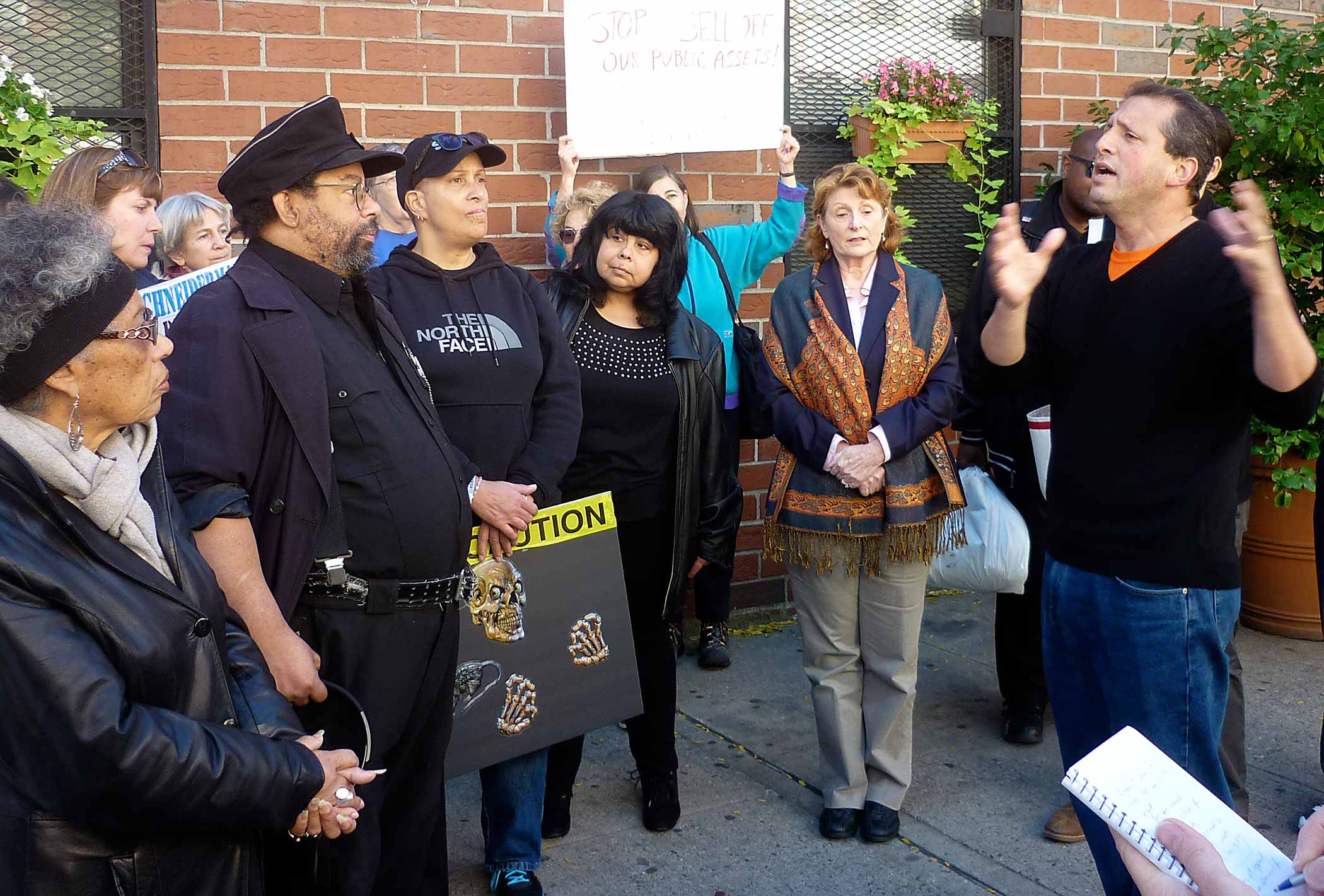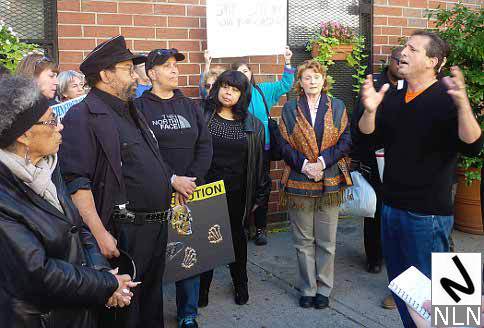
City Council member Brad Landers addresses protestors
(Photo: Roy Murphy / NLN)
BROOKLYN, NY - October 29, 2014. Three days after a protest march down Atlantic Avenue against the closure of the full-service hospital, New York State Attorney General, Eric Schneiderman, and Comptroller, Thomas Di Napoli, approved the State University of New York’s (SUNY’s) plan to sell Brooklyn’s Long Island College Hospital (LICH) to a real estate developer.
The 157-year-old hospital served a fast-growing swath of Brooklyn stretching from Red Hook to Williamsburg.
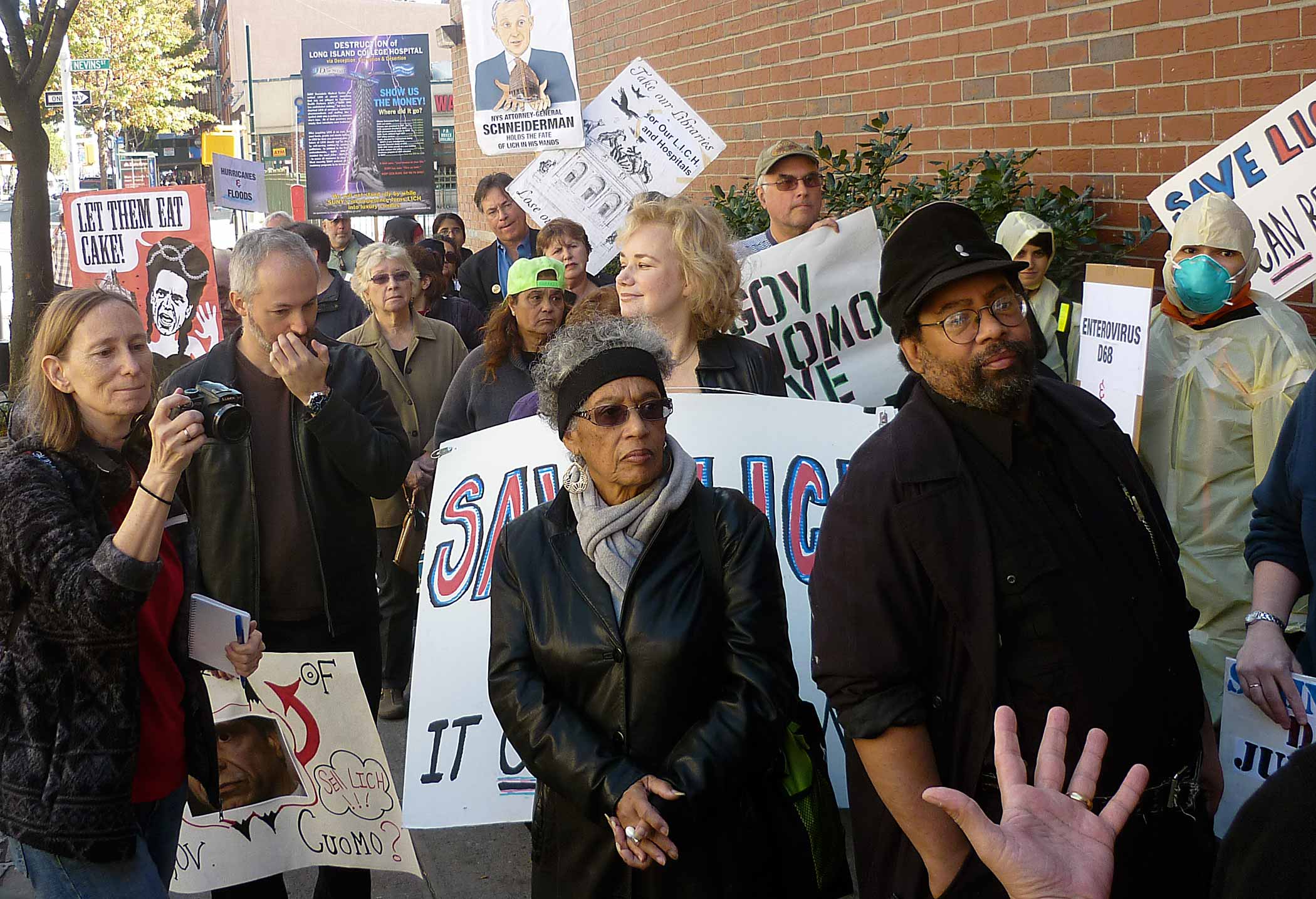
The protest march of about 60 people included City Council member Brad Lander and Congresswoman Nydia Velazquez. A month before New York’s Comptroller Scott Stringer had said, “Brooklyn’s exploding population needs more health care services, not less.” And in July last year Mayor Bill de Blasio, while he was a mayoral candidate, was arrested while protesting the closure of the LICH.
SUNY has repeatedly said it had to shut down LICH and sell the property because the hospital was losing millions of dollars a month. However, evidence has emerged that LICH treated thousands of patients for free for almost two years, losing at least $100 million in revenues. It could not bill the insurance companies for that money because it failed to register its doctors with the companies.
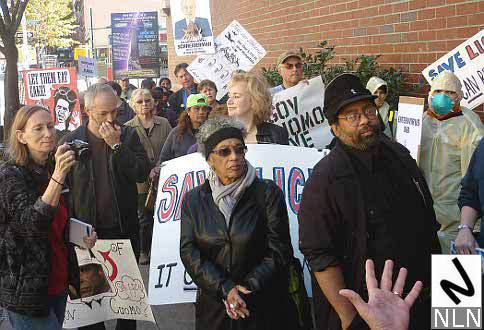
Protestors on Atlantic Avenue, Brooklyn
(Photo: Roy Murphy / NLN)
It is not yet known whether SUNY has to repay $140 million it borrowed from the Othmer Endowment.
“What happened to the Othmer Endowment money?” Lander said to the protestors. “Was the bidding process legal and appropriate? At so many points it appeared rigged,” he said.
SUNY Board Chairman H. Carl McCall says the sale will include “health care services for the community” in the form of an ambulatory care center. “This includes the construction of a new state-of-the-art facility and a total private investment by NYU Langone Medical Center of $175 million,” McCall said.
The march came after nearly two years of community protests and legal action. A coalition of community organizations, health care providers and elected officials has maintained that northwest Brooklyn’s growing population needs a full-service hospital, not a “walk-in” emergency department.
Roy Murphy is a regular contributor to NLN and a member of the National Writers Union, UAW Local 1981