(Photo: Time Life Pictures / Getty Images [ Brittanica.com ] )
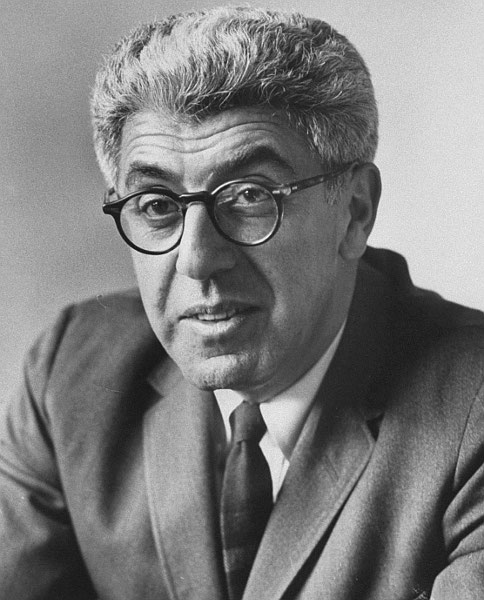
Environmental advocate, presidential candidate and former Washington University professor Barry Commoner passed away on September 30 in New York City.
Commoner was 95 and lived in the Brooklyn Heights neighborhood. A product of New York City, he was raised in Brooklyn and was trained as a biologist, earning a bachelor’s degree from Columbia and master’s and doctoral degrees from Harvard.
After his service as a Navy officer in World War II, Commoner taught at Washington University from 1947 to 1981. In 1966 he founded the Biology of Natural Systems at WU and moved the institution to New York’s Queens College in 1981. He served as its head until 2000.
Commoner believed science should be used to empower the community. His work on the effects of radioactive fallout from nuclear weapons testing from the United States and Soviet Union contributed to the Nuclear Test Ban Treaty of 1963. In the same year as that landmark treaty he and Margaret Mead founded the Scientists Institute for Public Information, which served as a tool the scientific community used to educate the public. Commoner penned books like “Science and Survival” (1966), “The Closing Circle: Man, Nature and Technology” (1971), and “The Politics of Energy” (1979) that are considered classics of the environmental movement.
Commoner’s biographer Michael Egan said that Barry was less of an environmentalist than “someone who was committed to improving society as a whole.”
St. Louis resident Dr. Danny Kohl studied under Commoner at WU as a graduate student and also served as an assistant professor in the botany department.
“I think his greatest legacy is that change doesn’t occur through whispering in the ears of the powerful,” Kohl said. “He wanted to get scientific information out to the public and let citizen’s groups organize for change. He felt social change came from social movements.”
Also among Commoner’s accomplishments are formulating four laws of ecology now covered in many textbooks: everything is related to everything else, everything must go somewhere, nature knows best, and there’s no such thing as a free lunch. Commoner blamed environmental degradation on capitalist economics in industry, agriculture, energy and transportation. He felt capitalist systems promoted profits and technological progress with no concern for environmental impact.
The scientist/activist took a journey into electoral politics in 1980 when he ran for the presidency on the Citizens Party ticket against Republican Ronald Reagan, Democrat Jimmy Carter and Independent John Anderson. The Citizens party stressed environmental issues. American Indian Civil Rights Activist LaDonna Harris was Commoner’s running mate. Harris remembers the rigors of running on a third party ticket. When she and Commoner travelled around the country campaigning in the 1980 election they often stayed in the homes of Citizens Party members. She said the party was started by citizens who were tired of the two-party monopoly in American politics.
“He [ Commoner ] taught me so much about the environment,” Harris said. “Like the things we’re doing to the environment that we don’t even realize. Barry had a real global perspective.”