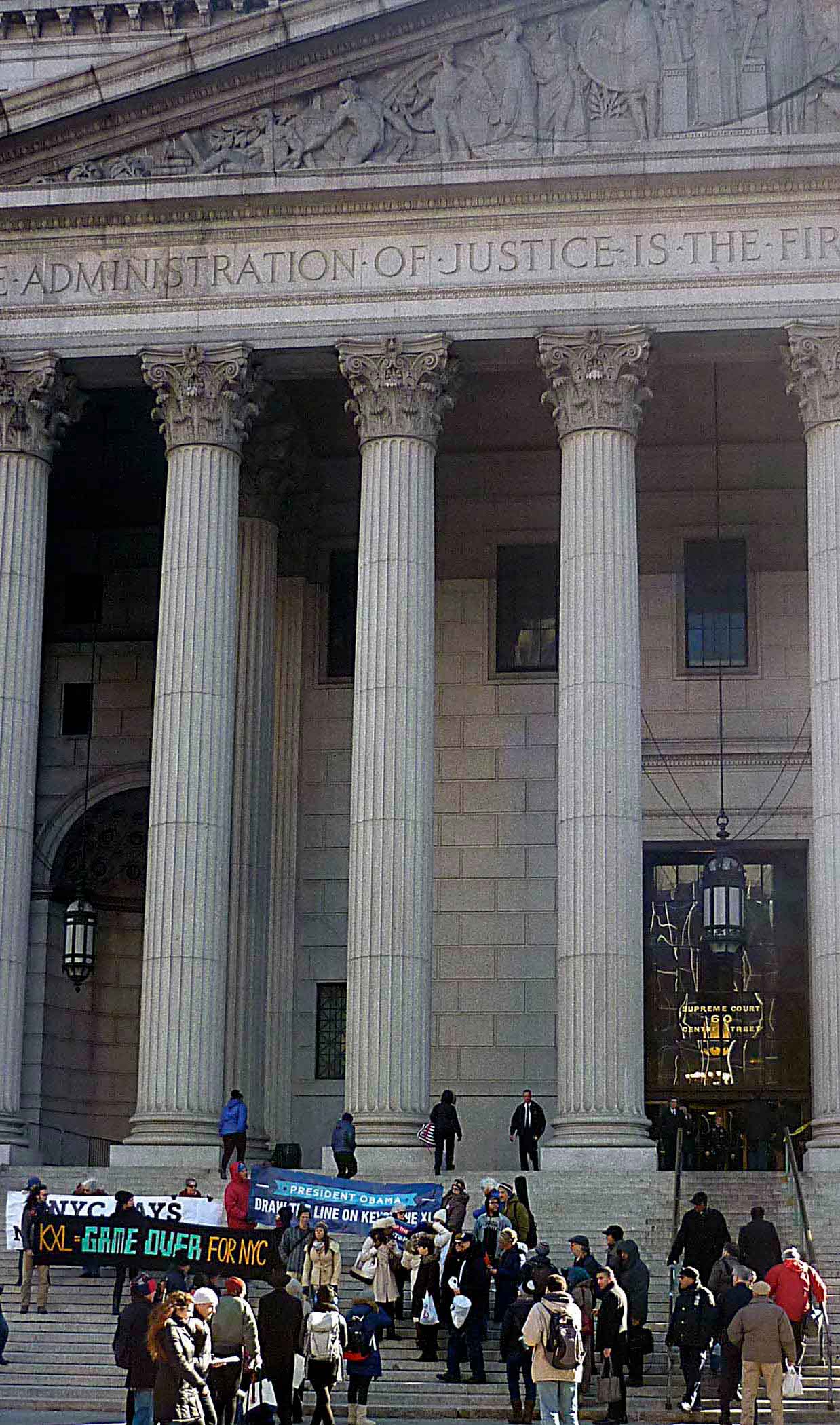
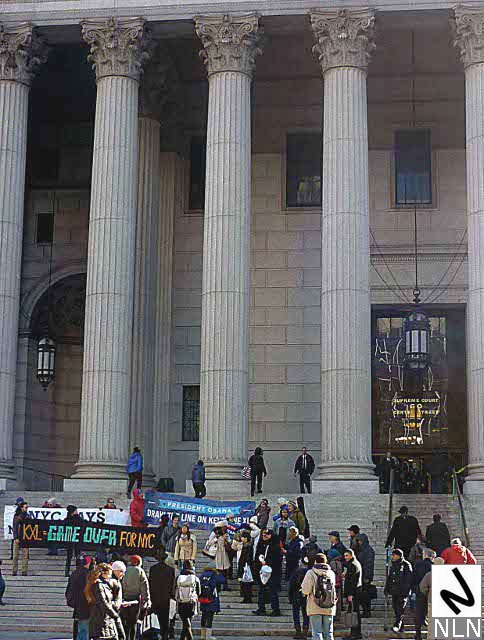
 Protestors on the steps of Manhattan’s State Supreme Court
(Photo: Roy Murphy / NLN)
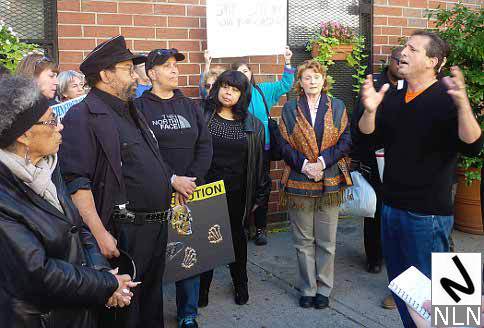
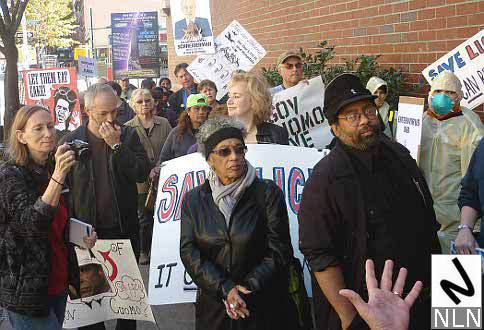
NEW YORK — November 18, 2014. On Tuesday, 50 protesters gathered in front of the State Supreme Court buildings in Manhattan to hold a “KXL=Game Over NYC” press conference. The event, one of many held across the country, was organized by 350NYC.org. It was designed to put last-minute pressure on the Senate, which voted on whether to approve the pipeline that evening. The vote failed.
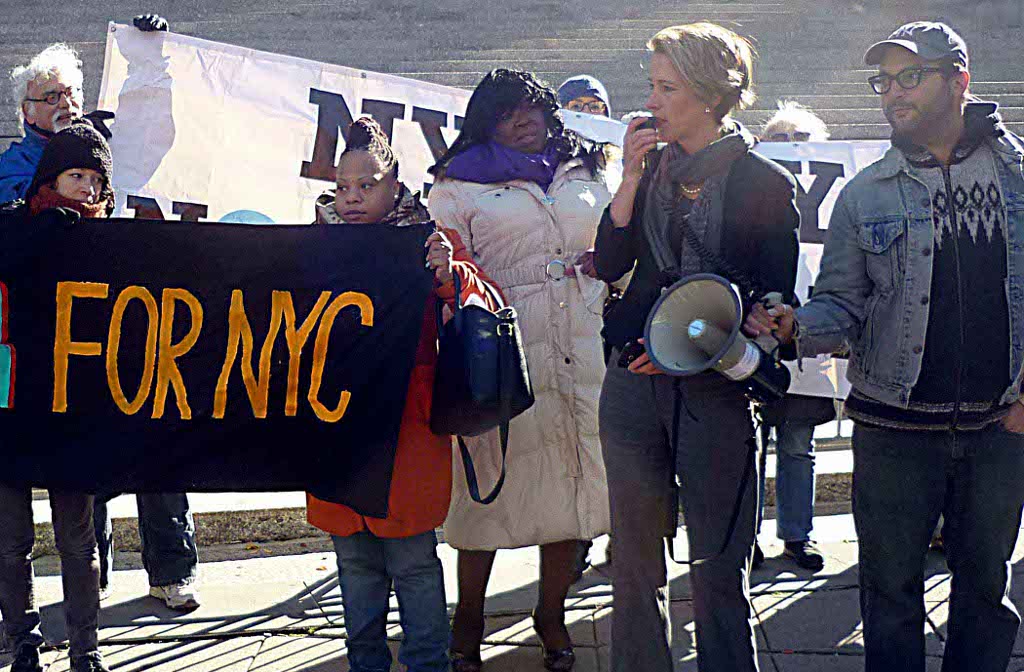
Zephyr Teachout, who gained a third of the votes when she challenged Andrew Cuomo for the governorship, told the protesters, “They want a 1,700-mile pipeline to transport the dirtiest oil on the planet. The pipeline may not go through New York City, but millions of gallons of salt water did go through our subway system.”
New York city is cited as one of the three major cities in the world most threatened by the rising waters caused by climate change.
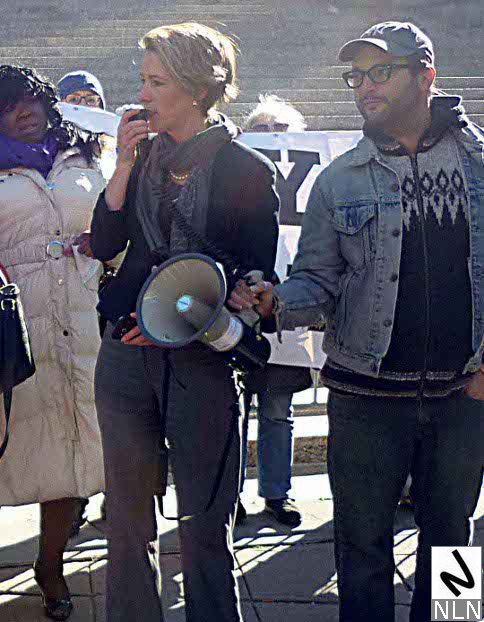 Zephyr Teachout addressing the protesters
(Photo: Roy Murphy / NLN)
Teachout said Charles Schumer and Kirsten Gillibrand, the New York senators, should not just vote against the pipeline, but should speak out every day against fossil fuel use. She said that’s also true for New York governor Andrew Cuomo, former New York senator Hillary Clinton and President Barack Obama.
“It’s time to stop digging, to stop fracking. The nation that poisons its air chokes itself,” said Teachout.
Alexis Smallwood, an activist with Rockaway Wildfire, a community organization that sprang up after Hurricane Sandy, lived through the destructive effects of the hurricane. She ended her speech by bouncing up and down and chanting, “We’re all fired up, we can’t take it no more!”
 Bethany and Rufus performing at the protest
(Photo: Roy Murphy / NLN)
The Bethany and Rufus musical duo sang two spirited protest songs, helped by many of the protesters during the choruses.
According to 350NYC.org, the thousands of jobs the pipeline would create would last only one or two years. The CEO of TransCanada conceded that it will retain only 50 employees in the United States once the pipeline is finished.
The Keystone XL pipeline bill went down to a very narrow defeat: fifty-nine senators voted for the pipeline bill, one short of the 60 needed to clear a filibuster. Joining all of the Senate’s Republicans, 14 Democrats voted for the bill.
Legislation to force approval of the pipeline will likely make a comeback as soon as the new Congress is sworn in in January, when a bill will have more supporters in the Senate.
“Republicans are committed to getting Keystone approved,” said Minority Leader Mitch McConnell (R-Ky.) on the Senate floor. If not today, McConnell said, “then a new majority after the beginning of the year will be taking this up and sending it down to the desk of the president.”
NLN contributor Roy Murphy is a member of the National Writers Union, UAW Local 1981