A house on Hunter Avenue, Dongan Hills, Staten Island.
(Photo: Thomas Altfather Good / NLN)


STATEN ISLAND, N.Y. — January 2, 2013. Journalists don’t often get thanked for requesting an interview — especially when they interrupt someone’s holiday — but on New Year’s Day a Sandy survivor named Elizabeth Hession said to this reporter, “Thanks for caring.”


Another Hunter Avenue home, knocked off its foundation by Sandy.
(Photo: Thomas Altfather Good / NLN)

 
RAPID REPAIRS?

 
Liz Hession owns a home on Hunter Avenue in the Dongan Hills section of Staten Island. Her street was particularly hard hit by Hurricane Sandy. On the night of October 29, the 60-year-old Staten Islander stared out her window in disbelief as a wall of water roared down the avenue. She and her husband, their dog, and four birds ran for the attic. 12 hours later, they were rescued by first responders in a rowboat. The Hessions were deposited on Hylan Boulevard, in three feet of water. They were eventually located by their daughter who took them to shelter. Two of the birds died but the soaked and stunned Hessions survived Sandy. Three days after the storm, they returned home. Sandy’s flood waters had done considerable damage. Hession’s 71-year-old husband, Jim, gutted their home, cleaning the affected areas with a bleach solution, as the couple awaited the arrival of New York City’s so-called “Rapid Repairs” program. It never came.


Volunteers from the University of Maryland delivering supplies in Midland Beach.
(Photo: Thomas Altfather Good / NLN)

 
On December 15, Liz spoke out at a forum organized by Occupy Sandy — the all-volunteer community based relief effort that maintains a “hub” in Midland Beach, not far from the Hessions. She questioned what the Red Cross was doing with all of the donations it had solicited on television and the internet.


Volunteers are the backbone of the relief effort in hard hit Midland Beach.
(Photo: Thomas Altfather Good / NLN)

 
“I heard that people were contributing billions of dollars throughout the world, not just in the United States, not just in New York. Text something on your phone to contribute ten dollars to the Red Cross because they’re gonna be there, they’re gonna help,” she said.


The final resting place of James Rossi, 85-years-old.
(Photo: Thomas Altfather Good / NLN)

 
“Where is all that money,” she asked, “I want to know where that money is right now,” she said as the audience cheered.


The gutted home of Slava Viner, Midland Beach
(Photo: Thomas Altfather Good / NLN)

 
“What I need is contractors coming in and helping us. And they’re not there. Rapid Repairs, we applied when they first came out. It’s already six weeks we’re waiting for Rapid Repairs,” she said.


Rapid Repairs?
(Photo: Thomas Altfather Good / NLN)

 
Two weeks later, on New Year’s Day, Liz Hession told NLN that the only contact she had with Rapid Repairs was a phone call. A program representative had called her a few days earlier to ask if she was satisfied with the repairs effected by the City — repairs that never happened. Hession told the rep that no repairs had been done. The representative apologized and promised to get the Hessions help. Three days later another Rapid Repairs rep called, asking Jim Hession if he was satisfied. He wasn’t and he let them hear it. As of January 1, Liz Hession and her husband were still waiting for a site visit from Rapid Repairs.

 
“Nothing’s changed, it’s gotten worse actually, because they’re all screwed up over there,” she said.

 
The Hessions were “lucky” — a relative concept for Sandy survivors. They did receive $31,900 from FEMA, the maximum amount. Liz doubts that it will cover all their losses. Their home sits on a four foot concrete slab. But the house filled with seven feet of flood water — Liz said that an 11 foot storm surge hit Hunter Avenue when Sandy came ashore. The home was wet for three days and like other survivors the Hessions had a serious mold problem when the water receded. Although they used a FEMA-recommended bleach solution to kill the mold, a drenching rain in late December, and no infrastructure repair — no electricity to run a dehumidifier, could wash away their efforts at mold remediation.

 
“My husband did clean the mold out. But whether it’s grown back because it’s been rainy and damp and we don’t have any dry heat [ or electricity ] to run the dehumidifier or anything like that, I’m not sure. When we get back in the house, we’ll know,” Liz said.

 
Mold remediation is both a serious health crisis in the making and a metaphor.


Got Mold?
(Photo: Thomas Altfather Good / NLN)

 
GOT MOLD?

 
The official relief effort has been marred by double binds and catch 22 scenarios. FEMA will not pay for mold remediation — and most reputable contractors want cash up front. Rapid Repairs provides a free boiler and restores electricity to battered homes but their workers will not enter a dwelling if they find that mold is present.


Health care worker — and Midland Beach resident — Lyn Governale.
(Photo: Thomas Altfather Good / NLN)

 
Addressing participants at the December 15th Occupy Sandy community speakout, Midland Beach resident Lyn Governale described the problem.


The interior of Governale’s home.
(Photo: Thomas Altfather Good / NLN)

 
“My neighbors lived in their house for 30 years — they can’t come back. Just so many people feel like they don’t know where to turn, they don’t know who to turn to. Insurance companies aren’t coming through for us. FEMA has been minimally helpful. I see my neighbor rebuilding her house — with mold in it. And she just thinks she has to just keep going,” an emotional Governale said.

 
“We need help out here,” she added.


Click to hear Sandy survivors speak out. (Video)


Waiting for the insurance company…
(Photo: Thomas Altfather Good / NLN)

 
IN GOOD HANDS?

 
Angela DeSanno wasn’t at home when Sandy came calling. The social worker was on vacation — stuck on a cruise ship with no way to get home.

 
“I was on the phone with my family — my son, daughter and mother — through the storm until the phones went dead,” DeSanno told NLN.

 
DeSanno’s mother, who lived in the lower level of the Mother-Daughter house, knew that the family home was in Zone B and therefore, according to the Mayor’s office, they didn’t need to evacuate.

 
DeSanno’s son Anthony had bought all the recommended items — water, batteries, tape for the windows — and reassured his mother that everything would be fine.


A 185′ water tanker parked on Front Street in Clifton, Staten Island.
(Photo: Thomas Altfather Good / NLN)

 
“The night of the hurricane was kind of weird. We were all on the phone and my mother kept saying that it was barely raining. She said that she thought the weather reporters got it wrong again! She kept saying that she was going downstairs to go to bed,” DeSanno said.

 
“When I moved to Staten Island from Brooklyn 25 years ago, the realtor told us the house was considered a Mother-Daughter. She said that our home was a little more expensive than others that were similar because we were ‘above the Boulevard.’ Coming from Brooklyn, I had no clue what that meant. Apparently, you don’t have to worry about flooding or water in your apartment when you live above the Boulevard. Through all the years that we have lived here, we never had an issue. My mom’s apartment never got any water during storms,” she said.


A storm-damaged car: water inside, seaweed in the grille.
(Photo: Thomas Altfather Good / NLN)

 
This changed on the night of October 29. Brittany, Angela’s daughter, looked out the window of the second level, concerned about wind damage. She saw cars going down the block at high speeds — in reverse. DeSanno’s kids woke their grandmother and brought her upstairs. Within minutes the back doors of the house were blown out by a massive surge of water. The grandmother’s apartment filled with flood water and the second floor apartment also took in water.


A grunt hands a nyc.gov flier to a homeowner in Midland Beach.
(Photo: Thomas Altfather Good / NLN)

 
“My family was trying to call 911 but was unable to get through. At that point, my contact with them ended as the phones went dead. My family was rescued that night by the Coast Guard — with boats! My mother was taken to Staten Island University Hospital with chest pain and my kids slept on the floor of the hospital with wet clothes. The hospital was having problems of their own,” DeSanno said.

 
DeSanno lost the use of her mother’s badly damaged apartment and all of its contents. The family lost their cars, furnace, hot water heater, and electrical panel. The second floor apartment was damaged but the family remained there, without heat, electricity or hot water — having no where else to go. An insurance adjuster was able to get them a $3,000 advance from their insurance company. He told the family that they had several thousand dollars in damage.


In South Beach: a home missing an exterior wall.
(Photo: Thomas Altfather Good / NLN)

 
“My son and daughter contacted FEMA, and my flood insurance and home owners’ insurance company, State Farm, two days after the storm. All paperwork was filled out and completed by day four. It is now January 2 and we still have not heard a word from anyone,” DeSanno told NLN.


Staten Islanders on line to get gas for their generators.
(Photo: Thomas Altfather Good / NLN)

 
“My son Anthony suffered second and third degree burns on both arms the week after the storm — bringing a pot of boiling water to the upstairs bathroom so I could take a hot bath. He fell with the pot. He lost his job and did not have any medical coverage. One of the nurses told us that FEMA should be able to help with the medical bills as his injury was related to the storm. No word from FEMA on that issue either,” DeSanno said.

 
Adding to the misery was the threat of looters.

 
“There was looting in the first week or so. My daughter was followed into the back yard by a man who looked like he was a drug addict. It was around 5:00 pm, just getting dark and she was coming home from work. My son saw her and came out of the house and questioned the man. He made up a story and left the property. I’m not sure about my neighbors [experiences]. Many of them have not come back to the block yet.

 
DeSanno’s insurance company has indicated they will not cover any possessions that were destroyed when the first floor flooded — because the apartment was in a “basement” area. This issue was never raised during the years the company collected premiums.


A house on Quincy Avenue — its foundation is on the other side of the street.
(Photo: Thomas Altfather Good / NLN)

 
The DeSanno’s are not alone. Many Islanders have had insurance claims denied primarily because most hurricane insurance only covers wind damage, not storm surge. In addition insurance companies have argued that if a policy lists any “excluded peril” and the damage suffered is a mix that includes any such exclusion (“multiple causation”) then the claim can legally be denied. Once a victim is denied by their insurance company they may be eligible for a lower interest FEMA loan, usually 1.688 percent to 4.0 percent. But only after they are denied a bank loan — whose interest rates range from 3.375 to 6 percent.


A large sinkhole outside South Beach Psychiatric Center.
(Photo: Thomas Altfather Good / NLN)

 
Many homeowners who have been denied by their insurance carriers are faced with a choice: foreclosure or taking on more debt. A high interest loan and a mortgage on a home that has lost most of its value is a distressing prospect. In addition, FEMA home loans are capped at $200,000 and the agency requires collateral.


A pile of shingles on Cedar Grove Avenue in New Dorp Beach.
(Photo: Thomas Altfather Good / NLN)

 
As a result of community members not being able to get viable assistance, some neighborhoods resemble ghost towns. Some homeowners have simply walked away from their shattered homes, being unable or unwilling to take on crippling debt. Those who do return have no way of knowing if the house next door will ever be reoccupied. The official death count on Staten Island, with Midland Beach being hit the hardest, is 23. But many more people are simply not accounted for — their whereabouts are unknown. High interest loans, devalued properties, and missing neighbors weigh heavily on the minds of those who choose to rebuild.


Click HERE to see “Inside Zone A” (Video)

 
Addressing her fellow survivors at the December 15 speakout, Midland Beach resident Simona Safari was visibly upset. Speaking about the issue of having to pay interest on FEMA loans she asked, “Why [do] the state and government have to make money on us?”

 
Adding to the cost of rebuilding, Safari said that the City will not re-evaluate property values before calculating next year’s property taxes, despite the fact that many homes are now worth a fraction of their pre-disaster value and the homeowners are being forced to take on additional debt. Safari blasted the Mayor who has been silent on this and other issues.


Celebrity chefs Clemenza (center) and Burmeister (right) serving free food in Midland Beach.
(Photo: Thomas Altfather Good / NLN)

 
“Our mayor is again preoccupied with the issue of sodium intake. And how much soda we drink. Where is he?” she asked.

 
In a report entitled “Shouldering the Debt,” an Occupy Wall Street “offshoot” called Strike Debt pointed out that, “The focus on lending moves money from the victims of disaster into the hands of loan servicers who make $1 billion in profit annually off of these loans,”

 
Things aren’t much better for small business owners. Small Business Administration loan applications are 30 pages long — and many Sandy victims report that their personal papers, including documentation required by the SBA, were destroyed by flood waters.


Sam Cocozza in his New Dorp Beach home.
(Photo: Thomas Altfather Good / NLN)

 
RETURN TO NORMAL?

 
Sam Cocozza lives in New Dorp Beach. During the storm his basement filled with water and the tidal surge left a foot of water in his family’s living space.

 
Cocozza’s in-laws lived a few streets closer to the water and their home also flooded. Like many families in the area, they had wanted to ride the storm out in order to protect their property but the tidal surge washed away those hopes. Many of the residents of New Dorp Beach, including Sam and his extended family, ran — or swam — for their lives as the surge pushed a wall of water into their community, filling the streets and their homes in a matter of minutes. Wanting to escape together, Sam tried to get to his inlaws’ house to pick them up — but the water was moving too fast. He found them later, safe but soaked and shivering. They were shaken but they had survived.


Cedar Grove Avenue — a few blocks away from Cocozza’s home.
(Photo: Thomas Altfather Good / NLN)

 
Around midnight the tide receded somewhat and rescues began — many residents of New Dorp Beach were trapped in their attics or on rooftops. The survivors found themselves wet, weary, and homeless. After basic survival needs were addressed thoughts of rebuilding began to emerge. But recovery would be a very long process.

 
As a Verizon employee, Cocozza worked long shifts restoring communications for storm victims, even though his own home was flooded.


A Verizon worker on the job in Stapleton.
(Photo: Thomas Altfather Good / NLN)

 
“We were forced [ to work ] twelve hour days, to restore other peoples’ service. Telephone poles were down so peoples’ tv and internet services were out, telephone lines were down, so yeah we were forced to work 12 hours days. At least for the first four or five weeks after the storm hit.

 
In the affected areas you had a lot of people that were still living there and they wanted their tv and internet back, it was important to them. But I had a feeling that almost all of the fixes were temporary. We’re obviously going to be back there once their construction is done. It was more, seemed to be like, making people feel better — more than an actual fix.

 
We had worked on one block where the gentleman was almost shell shocked. He was glad to see us repair his services but he mentioned that there was four dead people on the block. In general there were some shell shocked people. It was tough. It was tough seeing devastation after devastation. And there were different degrees of devastation. By me in New Dorp Beach, we thought it was pretty wrecked but then as you go down to areas closer to the water, you see — it gets worse. There are different levels of devastation, I would say, from bad to worse. There were several blocks, I worked in Oakwood Beach and Midland Beach, and two times people told me that were two or three people dead on the block.”


Click HERE to see Sam’s home (Video)

 
Cocozza applied for New York City’s “Rapid Repairs” program.

 
“The Rapid Repairs I’m going through now, and it is slow. The time between the electrician comes and the boiler guy comes, it’s slow but all things considered…” he said.


Survivors on Sand Lane (South Beach) express their gratitude to all who helped.
(Photo: Thomas Altfather Good / NLN)

 
Cocozza said that the Red Cross was on the disaster scene relatively quickly but their activities were limited to distributing food, and the food didn’t compare to what local businesses were offering. Local pizzerias stepped up, in true New York fashion, delivering pizza to people who were sticking it out in their homes.

 
“It was almost like, ‘no thanks Red Cross, there’s pizza behind you.’ Or a college kid walking along with a shopping cart full of Subway sandwiches,” Cocozza said.

 
Sam doesn’t expect a quick fix, even with “Rapid Repairs.”

 
“There’s a long way to go. About 50 percent of the people have moved back in. While the lower floors are being repaired they’re living on the upper floors,” Cocozza said.


As with Hession and Governale, mold remediation is a big concern for Cocozza who not only worries for his neighbors’ well being but also has to work in their homes, homes that could be filled with black mold.

 
“People are putting sheetrock back up without doing any of that [ remediation ],” he said. Cocozza paid a service to dehumidify his home and to use anti-microbial spray to kill the mold - trying to do remediation the right way - but not everyone has the resources to pay for remediation. The net result is that people are using bleach, vinegar and even anti-freeze to try to kill the mold. Cocozza points out that the FEMA website states clearly that bleach WILL kill the mold on smooth surfaces. But wooden beams are not smooth. And so the mold may return.

 
While his home is drying out and being slowly brought back online Cocozza continues to work in the field, encountering other hazards. Although it took a little prodding, Verizon management did eventually provide masks and rubber gloves. Then Cocozza, a CWA steward, had to educate his coworkers that they needed to be safe.

 
Sheetrock dust, asbestos, mold and other airborne toxins make masks essential. And gloves protect workers from all that the storm waters carried into the victims’ homes.


“There’s sewage all over all the equipment we’re touching,” Cocozza said.

 
For Sam, his coworkers, and his fellow Staten Islanders, it will be a very long time before anything resembling normalcy returns to their lives.


Clifton, Staten Island.
(Photo: Thomas Altfather Good / NLN)

 
EPILOG

 
Although it is something of a cliche to refer to Staten Island as “The Forgotten Borough,” it remains by and large an accurate description — at least in the minds of its residents. FEMA took over five days to arrive on Staten Island; the Red Cross was late getting to Midland Beach — and when they arrived all they had to offer was poor quality food; and Rapid Repairs is, by most accounts, anything but. The Mayor’s response has been criticized by survivors, the Congress has been brutally slow in providing aid, and the only politician to take action on the mold crisis is Public Advocate Bill de Blasio. The voices of the forgotten borough are crying out for help as they struggle to rebuild. Is anyone listening?


“God Bless Staten Island…”
(Photo: Thomas Altfather Good / NLN)

 
Thank you to Angela DeSanno, Mike Dimino, Sam Cocozza and all of the First (and Second) Responders who are helping others while rebuilding their own lives. — Thomas Altfather Good, West Brighton, Staten Island.


Click To View Photos and Videos…
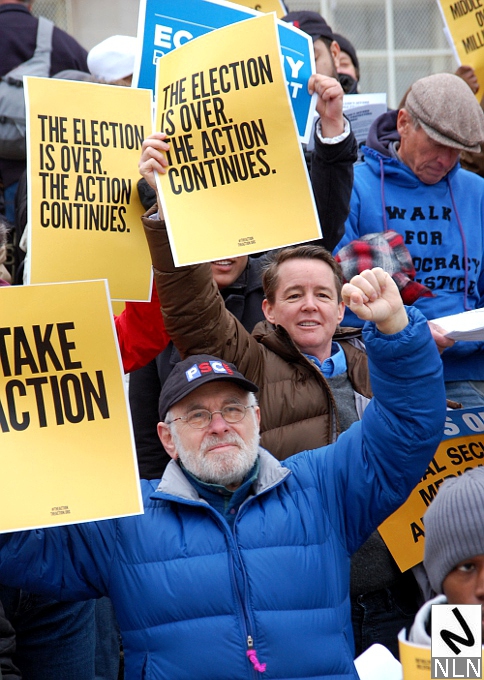


Jim Perlstein (foreground) demands Grimm act on behalf of his constituents.
(Photo: Thomas Good / NLN)


PROTESTERS SEND A MESSAGE TO MICHAEL GRIMM


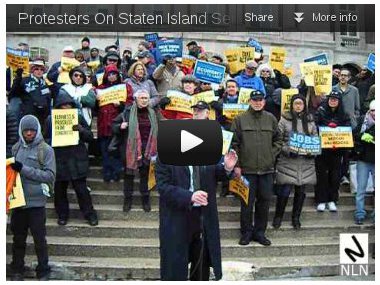
NEW YORK — On a brisk Saturday, the first day of December, protesters rode the Staten Island Ferry — dubbed the “Peoples’ Yacht” — from Manhattan to the Island, holding a rally at Borough Hall. The purpose of the journey was to deliver a message to Representative Mike Grimm (R, NY-11): don’t push New Yorkers, many of whom are still reeling from Hurricane Sandy, over the so-called fiscal cliff — vote to end the Bush tax cuts for the rich.


Activist-teacher Teri Caliari educates her congressman.
(Photo: Thomas Good / NLN)

 
Teacher, activist, and Staten Islander, Teri Caliari introduced speakers including the United Federation of Teachers’ John Soldini, Jim Perlstein of the Professional Staff Congress (PSC), a Sandy survivor who remains homeless, and Sara Cullinane, an activist from Make The Road who is doing relief work. The speakers were united in their demand that Congressman Michael Grimm end the Bush tax cuts and get much needed financial aid to help Islanders rebuild homes ravaged by Hurricane Sandy.

 
Attending the rally were some labor movement faithful, representing an array of unions, and progressives from several local organizations, including the Staten Island Democratic Association and MoveOn.


Richard Reichard (Staten Island Democratic Association) defends social security and medicare.
(Photo: Thomas Good / NLN)

 
“We had a tremendous turnout on Saturday- nearly 100 people came out to support Staten Islanders who are demanding their representative Michael Grimm put hurricane survivors over millionaires and end the Bush tax cuts. It was just the first event of many to come,” said Olivia Leirer, Communications Director of New York Communities for Change. NYCC organized the event.


Click HERE To View Photos From The Grimm Protest


ANGELA DAVIS AND HARRY BELAFONTE SPEAK


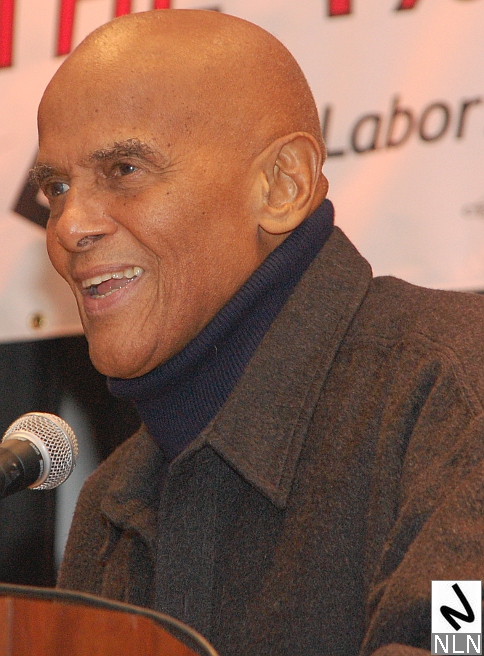
Harry Belafonte, 85-years-young.
(Photo: Thomas Good / NLN)


On Monday, December 10, the 1199SEIU Martin Luther King, Jr., Auditorium played host to a Left Labor Project forum featuring Angela Davis and Harry Belafonte.


Angela Davis speaking at the forum.
(Photo: Thomas Good / NLN)

 
The theme of the forum was “After the election, where do we go from here?”

 
Angela Davis said that all of the issues of concern to progressives — including reproductive rights, islamophobia, homo-and-trans-phobia, and immigrant rights — need to be redefined, and addressed, as working class issues.

 
Belafonte spoke about his work with SEIU — helping to build the Bread and Roses (cultural) and “Purple Gold” (youth) campaigns. Belafonte argued that the cultural aspect of working people’s struggle is vital — and too often neglected.

 
In a lighter moment, Belafonte said of Davis, “I’ve already written the book so I don’t need to speak about my love affair with her — she knows nothing about it.”

 
The pair touched on two themes often addressed by Davis’ mentor, Frankfurt School philosopher Herbert Marcuse. While Belafonte spoke about the importance of the cultural realm — Marcuse’s “aesthetic dimension” — in the struggle for progress, Davis talked about the importance of remembering prior struggles in an ahistorical time. Davis also spoke of the need to move the progressive political discussion from a defensive refutation of one-dimensional ideology to a broader vision of a just society. Given the importance of culture in shaping perception, the two speakers perspectives could be seen as bookends.


Click HERE To View Photos /Videos From The Left Labor Project Forum


Introduction: I originally intended to devote the better part of 2012 to this thought piece. But the entry of Paul Ryan into the election cycle has added some urgency. Perhaps the Democratic Party pundits are correct that Ryan’s positions on, say, Medicare and contraception are too extreme to help elect Republicans. Even if they are correct about this election cycle, we would be wrong to underestimate the importance and power of Ryan’s ideological agenda. Even in defeat, the right may take solace, if Ryan succeeds in promoting his ultra-free market agenda. If his ideas are not taken on directly, if they are temporized with, they will continue to haunt us.


It is also curious, if not ironic, that the proclaimers of individualism are better organized than the community-minded. The right does well at bringing good numbers together for a focused, discipline campaign — whether against ‘Obama-care’ or to vote in primaries; while the left functions in a much more individualistic manner — dwelling on what Freud called “the narcissism of small differences” — operating in isolated silos, hard pressed to organize a state-wide campaign, much less a national one. There is a difference between unthinking conformism and the conscious action of those struggling for authentic change in the structure of power. We can respect and support individual difference and still find ways to act collectively. This becomes possible if we think through which differences are matters of principle, which can be navigated, and which are not of immediate import.

- Howard Machtinger

 
Ryan’s politics, while extreme and mean-spirited, have a long pedigree in American politics and culture. His combination of extreme individualism and a sometime implicit, sometime explicit, appeal to white/male supremacy runs deep in our culture, and not only among the elite. The influence of individualist ideology on the thinking of many Americans has kept the left on the defensive throughout our history. It is at our peril if we depict Ryan as merely a right wing crazy, though he is surely that, if in a ‘nice-guy’ pose. For, as I will try to show, his politics resonate with American political traditions and with average Americans (mainly, but not only whites). The deterioration of the economy will not automatically lead to progressive action or politics. If we want our nation to become a more decent and more democratic society, we need to respond with an alternative vision of equal resonance. This will include an attractive evocation of the communal and social, an analysis of the structural, but also a recognition of parts of the individualist tradition that are not only compatible with, but essential to, progressive politics.

 
I propose a sober confrontation with the actual obstacles that we encounter in our day-to-day work so as to develop a more solid basis for our work. I am trying to turn my frustration with the current state of my country -and its left alternative — into an overall framework which both seriously takes account of and challenges the tenacity of American individualism. Otherwise I believe there will be a continuing disconnect between the left and its presumed constituency.

 
I have spent my adult life as an activist of the left, trying to convince others that fundamental change is necessary and possible, that the ‘people united can never be defeated’, and that grassroots activity not only reinvigorates democracy, but is the energy that drives substantive, progressive change. The movement in the streets helped end the devastating and inhumane war in Viet Nam. The actions of hundreds of thousands of ‘ordinary people’ ended Jim Crow. Countless women’s groups undermined patriarchy and placed the rights and status of women on the national agenda. Gay activists stood up against police harassment at Stonewall and beyond. The powers that be were forced to move because of the pressure of the grassroots. New political identities were created and innovative political forms developed. The pressure of the masses was the best — and often the only — way to make significant and positive change.

Continue Reading…


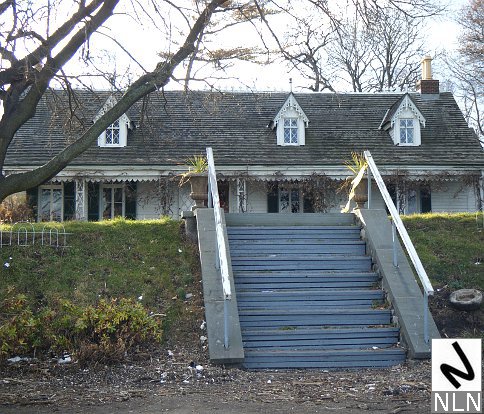
Alice Austen House - the storm surge rose to the top step on the staircase.
(Photo: Thomas Altfather Good / NLN)


STATEN SLAND, N.Y. — December 4, 2012. The Alice Austen House, the former home of Staten Island’s most famous photographer, now a museum, is located in the Rosebank section of the Island — and was directly in the path of Hurricane Sandy.

 
Alice Austen was a female photographer in a time when women stayed at home. She owned a motorcar and carried wrenches in her handbag. She lugged view cameras around, pioneering the field now known as photojournalism. Her home, known locally as “Clear Comfort,” is now a landmarked building and a museum where local photographers exhibit their work.


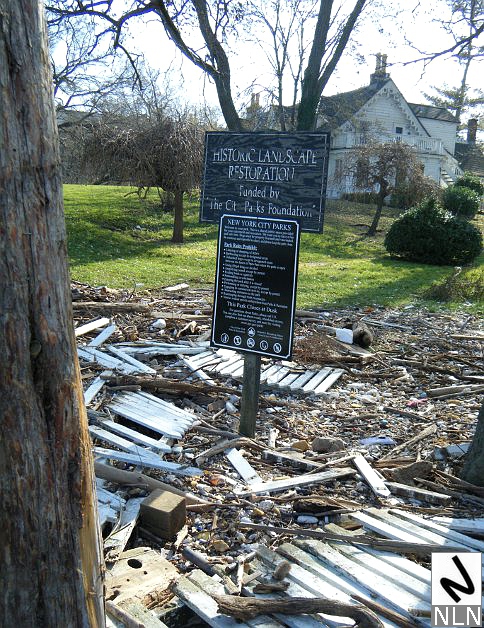
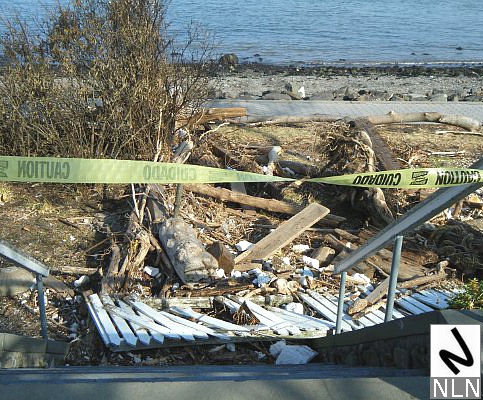
Debris from Hurricane Sandy in the park outside Alice Austen House.
(Photo: Thomas Altfather Good / NLN)

 
Alice Austen House is located on Staten Island’s eastern shore. It was this part of the Island that absorbed the full impact of Hurricane Sandy’s storm surge. Arriving at high tide, the storm surge created a wall of water that pushed debris inland and destroyed homes, property, and in some areas — lives.


Debris and seawater rose to the top step of the stairs leading to the house.
(Photo: Thomas Altfather Good / NLN)

 
Alice Austen House was built on a bluff. This fact saved it from destruction. The hurricane’s flood waters reached the top step of the staircase leading from the seawall to the sidewalk that ends at the porch of the historic structure.


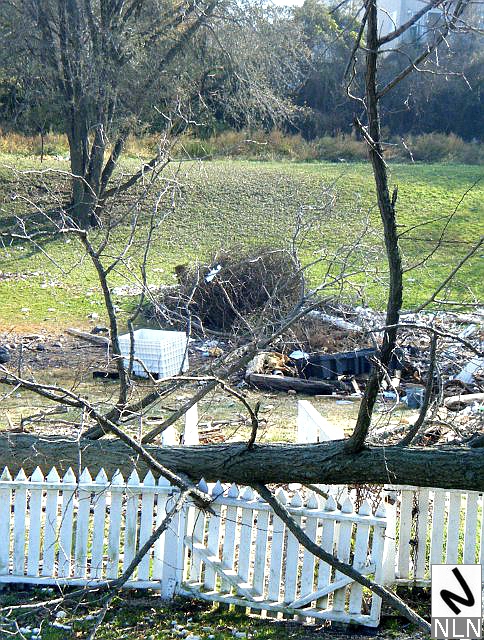
This tree landed on the picket fence — its branches touching the roof.
(Photo: Thomas Altfather Good / NLN)

 
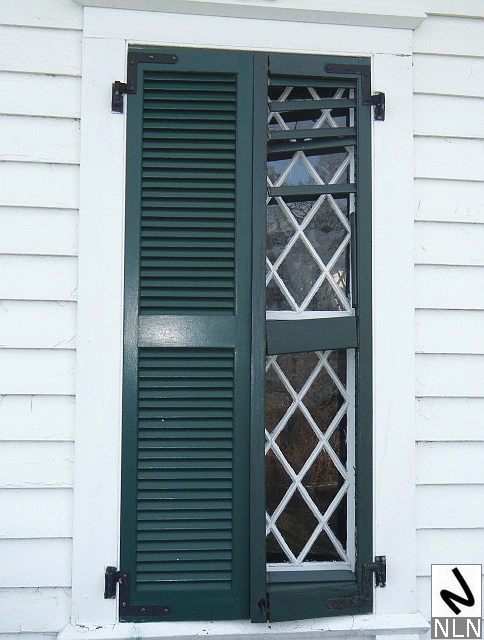
Sara Signorelli, Director of Museum Services, told NLN that the storm’s winds destroyed some decorative woodwork and damaged some shutters. In addition, two trees fell on the southern edge of the property, taking out the picket fence and destroying the garden. Branches from the larger tree, the trunk of which landed directly on top of the fence, came to rest on the roof of the historic home.


This storm damaged shutters and decorative woodwork on Clear Comfort.
(Photo: Thomas Altfather Good / NLN)

 
The park outside the house was filled with debris washed ashore by the hurricane but the house itself had survived, miraculously. Repairs are now underway and a large amount of debris has been removed. The rest of Staten Island continues to struggle. It may be months before power is restored — and years before the recovery is complete — but Islanders can take some comfort in the fact that one of the local treasures survived the so-called superstorm.


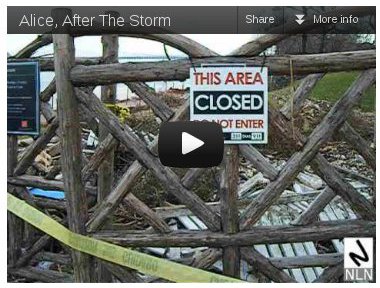
Click HERE To See The Video

(Photo: Thomas Altfather Good / NLN)


Photo Gallery


Posted by TAG - November 21, 2012 | News


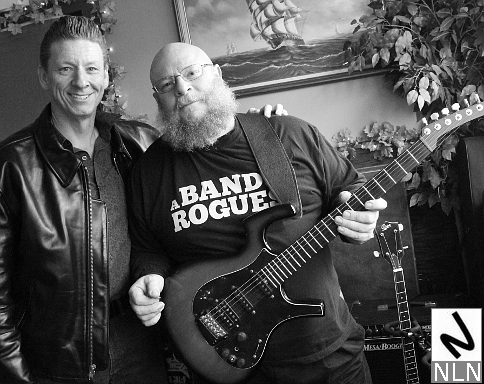
Sean McNally of A Band Of Rogues performing at Karl’s Klipper.
(Photo: Thomas Altfather Good / NLN)


STATEN ISLAND, N.Y. — November 20, 2012. It’s said, “Home is where the heart is,” and on Sunday so many of this reporter’s former bandmates and old friends turned out to raise money for Staten Islanders who have been left heartbroken by Hurricane Sandy that it literally was ““old home week.”


Bobby Moller and Frank Bonafato are two more of the “Rogues.”
(Photo: Thomas Altfather Good / NLN)

 
After Hurricane Sandy visited destruction on Staten Island, musician Joe O’Brien put on his organizer’s cap and went to work. O’Brien contacted musicians from a circle of people who have played together in various projects since the 1980s — some of whom this reporter had played music with back when, a number of whom I hadn’t seen in well over a decade. O’Brien didn’t have to twist any arms. Everyone turned up.


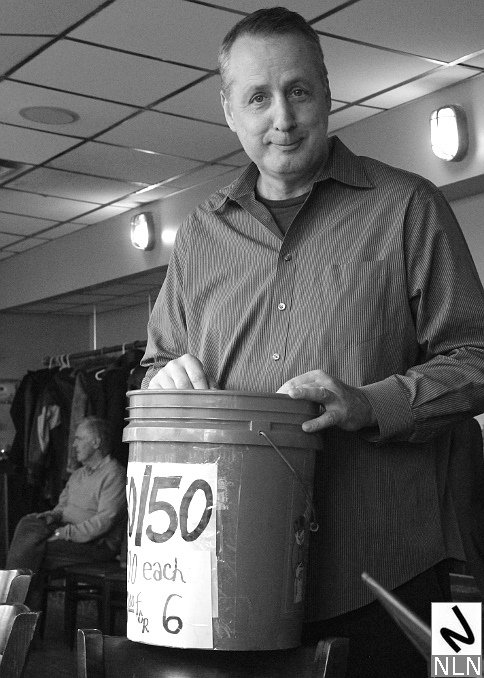
Joe O’Brien - keyboard player and benefit organizer.
(Photo: Thomas Altfather Good / NLN)

 
After college, life gets complicated: work, family, bills, and, dare I say it, middleage. Some of my old colleagues had moved to other towns and other states but when their hometown needed them, they stepped up. And when the dust settled the bands had raised $5000 for hurricane victims. What’s more, the money went to two local organizations that guarantee all donations go right to those in need: the William Mooney Memorial Foundation (who paid for the public address system) and the Stephen Siller Tunnel to Towers Foundation.


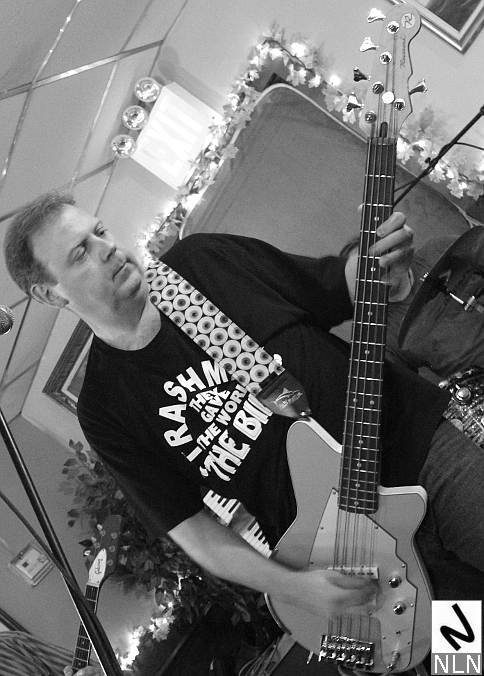
Tim Boyland - architect, bass player — and old friend.
(Photo: Thomas Altfather Good / NLN)

 
Karl’s Klipper, a restaurant and bar in the St. George section of Staten Island, hosted the rockers’ fundraiser. The narrow dining area was transformed into a night club for a special Sunday afternoon. Tommy O’Callaghan and Patsy Lonzello played some straight ahead rock, the Richmond County Pipe & Drum Corps marched down the aisles with their bagpipes in full throat, A Band Of Rogues performed their brand of high energy Irish folk-rock, an impromptu O’Callaghan grouping that featured a Klipper bartender (doing both jobs on Sunday) performed classic rock anthems, The Recruders played some loud and fast surf punk, and, The PocketCox did a set of Iggy and the Stooges standards.


Happy Donutz, a punk rocker who had no power for 8 days.
(Photo: Thomas Altfather Good / NLN)

 
Iggy and the Stooges standards? I had my doubts it could be pulled off. I saw Iggy in 1974 at the Toledo Sports Arena (Raw Power tour - paying an astounding $4.50 for the Stooges, James Gang and Slade), the Motor City Roller Rink in 1980 (Soldier tour), and New York’s Pier in 1988 (Instinct tour). Each and every performance was beyond superlatives. Iggy is a true original and for this lifelong fan it was tough to imagine anyone doing the legendary Jimmy Osterberg justice — or even coming close.


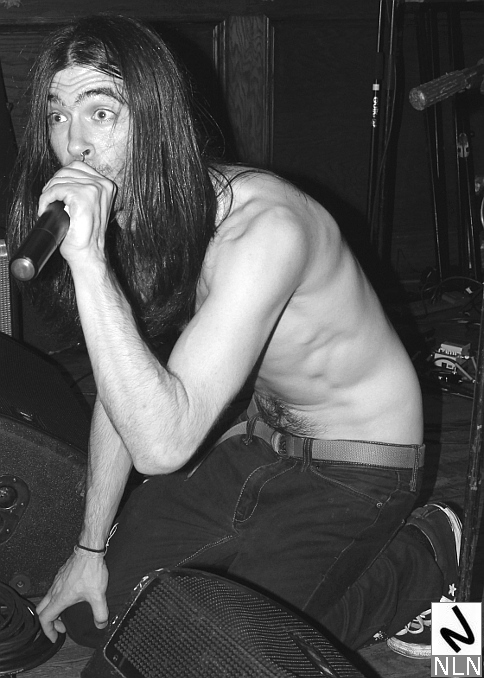
Singer Chris King in character — as Iggy Pop.
(Photo: Thomas Altfather Good / NLN)

 
But I was wrong. With “Happy Donutz” (who bears a striking resemblance to my old friend Rudy Bacich) igniting his Gibson, and architect Tim Boyland burning down the house on bass, Chris King channeled Iggy and nailed the part. The Stooges material — including Loose, TV Eye and I Wanna Be Your Dog — never sounded better. Two songs from the Bowie / RCA years, Lust For Life and The Passenger, sounded equally impressive. The set, and the show, ended with Search And Destroy from the Stooges best known recording: 1973′s Raw Power. Audience members joined in as PocketCox tore it up. My old bandmate, and ex-CNN cameraman, guitarist Mark Peters, grabbed the mike to sing a verse as the crowd screamed along: “I am the world’s forgotten boy…”

 
My ears were bleeding as I walked home after the gig — with a grin stretching from one wound to the other. It just doesn’t get any better than this: seeing old friends, a host of “forgotten boys” (but not by me!) donating time and talent to help the “forgotten borough” heal. If the so-called superstorm brought out the worst in people — and by all accounts the looters were very bad news — it also brought out the best. Staten Island is an inverted triangle resting due south of Manhattan. I like to think it’s shaped like a heart.


View Photos/Videos From The Event…

 
“Anyone who ever had a heart — they wouldn’t turn around and break it.” — Lou Reed


Author Jason Sibert is NLN Environmental Editor
(Photo: Jason Sibert / NLN)

 
ST. LOUIS — The St. Louis based Monsanto needs no introduction anywhere in the world, as the company is a multi-national biotechnology firm and a leading producer of genetically modified seed.

 
While Monsanto and other genetically modified food advocates often tout genetically modified organisms as a way to increase agricultural yields and fight world hunger, others have responded to the company’s practices with protest. The St. Louis chapter of the Occupy Monsanto movement engaged in more than one act of protest this month, according to Gateway Green Alliance Co-Coordinator Don Fitz.

 
From Oct. 16 to Oct. 17 OM held a demonstration against the chemical giant’s business practices at an industry conference at the Millennium Hotel in St. Louis, demonstrated in front of Whole Foods Market in Brentwood, Mo. and also held a demonstration outside of Monsanto world headquarters in Creve Coeur, Mo. The demonstration in front of Whole Foods occurred because OM said that the grocery giant stocks genetically modified foods.

 
In addition to his role with the Gateway Greens, Fitz is also an advocate of Occupy Monsanto. Like other anti-GMO activists, Fitz’s critique is multi-faceted. He said that the capital intensive nature of the GMO business allows huge corporations like Monsanto to establish too much control over the world food supply and that such power could lead to higher costs for consumers. Fitz also said the large amount of capital required of this form of agriculture drives more farmers from the land. Daniel Romano, an organizer with Gateway Greens and Safe Food Action, an organization that promotes organic foods and smaller systems of agriculture, is also worried about the power on Monsanto. He said patented GMO seeds establish intellectual and commercial control over particular seeds and that Monsanto’s technology fees drive up the cost of business for farmers. In addition, he objected to farmers not being allowed to save seeds after a harvest. He also said that approximately 50% of the seeds sold in the United States are from companies owned by Monsanto.

 
“Being able to patent human life is just unprecedented,” Romano said.

 
Fitz also said there were problems with GMO’s from a human health standpoint. He referred to a 1990′s study in the United Kingdom by Ampad Tuztai that revealed that rats fed GMO’s ended up with impaired immune systems.

 
“This could be a problem in places like Africa which struggle with AIDS (Acquired Immune Deficiency Syndrome),” Fitz said. “If people’s immune systems are weakened it could make matters worse.”

 
AIDS patients experience a weakening of the immune system, according to websites. Romano also said scientific studies support the dangers of using GMO’s. He said they cause internal organ damage, stunted growth and that fetuses are most susceptible to damage.

 
Fitz sited environmental the alleged environmental impacts of GMOs as a point for concern. He said using GMOs leads to more chemical use in agriculture, as GMOs designed to control weeds often lead to more pest evasion and therefore led to increased pesticide use. According to the Environmental Protection Agency’s website, “pesticides can cause health problems such as birth defects, nerve damage and cancer, but the overall effects depend on how toxic the pesticide is and how much of it is consumed.”
The website also says “pesticides are regulated at the state and local level to make sure that these products are used with reasonable certainty that they will pose no harm to infants, children and adults.” Romano had doubts about the EPA’s statement.

 
“Big agriculture, biotechnology companies and the EPA are intertwined,” he said. “EPA’s figures are supplied by industry. Their pesticide limits are way too high. Their figures aren’t solid independent science.”

 
Some GMO advocates say GMO’s increase yields and represent an answer to the problem of world hunger on a planet that keeps growing in population, an idea Fitz doesn’t agree with, as he said GMO use could lead to famine. He said there are only six to 12 varieties of any crop and if a GMO version of a crop goes into failure, it means a greater damage to the supply of that particular crop due to the lack of agricultural diversity in today’s agriculture. Romano said that weeds and insects eventually develop a resistance to GMOs and farmers end up having to use herbicides and pesticides to control weeds and insects.

 
Fitz and Romano both advocate organic farming and feel it hasn’t been given enough credit by the powers that be, as he said the U.S. Government gives subsides to other types of agriculture through farm programs and subsidizes infrastructure that is used to transport agricultural products from one place to another. Fitz said these subsides mask the costs of current agricultural practices against more expensive organic products. Fitz advocated using public research and development dollars to improve organic techniques such as crop rotations that repel insects.


Posted by TAG - November 15, 2012 | News


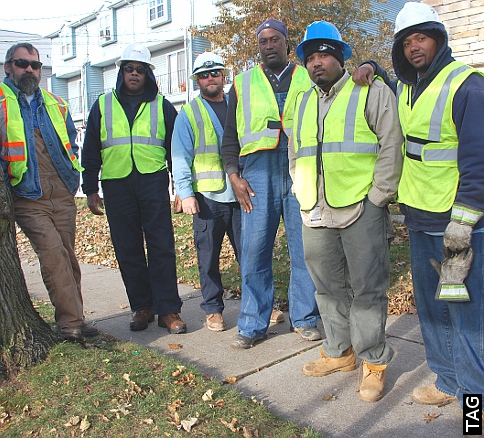
Electrical workers from DTE Energy (Detroit) - working on Staten Island
(Photo: Thomas Altfather Good / NLN)

 
STATEN ISLAND, N.Y. — November 15, 2012. Earlier today, this reporter spotted a group of electrical workers standing near their truck — not an unusual sight for New York City, except that these men were from Detroit’s DTE Energy.

 
I introduced myself and took a couple of pictures. The men asked if I would be putting the photos on the internet. I said yes and gave out my business card — which prompted a few comments, my favorite being, “United Auto Workers, that’s what I’m talking about!”

 
I explained that the National Writers Union is Local 1981 of the UAW, hence my union affiliation. It turned out that some of the IBEW workers had been UAW at one time. I mentioned that I still have friends and family in Local 12, in Toledo, not far from the Motor City — and thanked the guys for coming to the aid of a battered New York. Our friends from Michigan said they expected to be going home soon. I wished them well and walked away smiling — the first time I’d worn a smile in what seemed a very long time.

 
There are electrical workers from all across the country in Staten Island, working to restore power as I type. I can only say that, as a Staten Islander, I am grateful to them all — and to my new friends from DTE Energy I’d like to add, “Thank You, Detroit!”


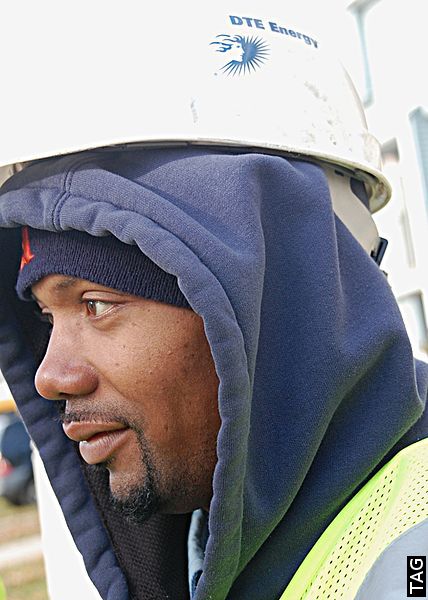
A fellow worker from the Motor City.
(Photo: Thomas Altfather Good / NLN)


Volunteers from the University of Maryland moving supplies in Midland Beach.
(Photo: Thomas Good / NLN)


STATEN ISLAND, N.Y. — November 10, 2012. Inside “Zone A” — the Hurricane Sandy evacuation zone — recovery efforts are well underway but volunteers far outnumber other responders.


Soldiers go door to door on dusty, mud covered roads.
(Photo: Thomas Good / NLN)

 
The streets are paved but you wouldn’t know it. Walking down Quincy Avenue in Midland Beach is like venturing down a back country road. It’s muddy, bumpy, and when a vehicle passes, dusty. A blue house on the west side of the road has a bright purple portable toilet stall next to it. Sanitation is a problem, there is no electricity, and the blue house was originally on the opposite side of the road. Sandy ripped it off its foundation and moved it across the street. At night it sits there, forlorn and condemned, beneath the shadows cast by gas-powered portable street lights. And yet there is a bright spot in all of this — a very bright, multicolored, spot: dozens of volunteers dot the landscape. Volunteers clad in color-coordinated t-shirts can be seen knocking on doors, doing demolition, pulling trash out of homes and bringing survivors food, cleaning supplies — and hope.


Quincy Avenue: this house was originally on the other side of the street.
(Photo: Thomas Good / NLN)

 
The hope volunteers are delivering is a valuable commodity. Con Edison, FEMA, and the Red Cross are nowhere to be seen. Residents busily engaged in removing debris from their battered homes laugh derisively whenever the subject of restoring power arises.

 
“Thank you Con Ed,” one man said, holding up a city-issued flier promising electricity.

 
“Is that your electric bill?” his neighbor asked.


A local homeowner mockingly displays a notice promising electricity.
(Photo: Thomas Good / NLN)

 
Nearby, roped off with yellow caution tape, is the shattered home of one James Rossi, an 85-year-old Midland Beach resident who didn’t make it out alive. There is a makeshift memorial to “Jimmy” on his front door and some seven day candles on the stoop. Hearing the victim’s story, one young volunteer, a journalism student, said, “Stop, I’m going to cry…”


The final resting place of Jimmy Rossi, 85-years-old.
(Photo: Thomas Good / NLN)

 
And yet, in the middle of catastrophe, hope has returned to Midland Beach — seemingly coming out of nowhere. A group of dedicated organizers, an ad hoc organization called the Ocean Breeze Relief Angels, are parked on Quincy Avenue, giving out cups of coffee and work assignments to young volunteers.

 
One group of young workers drove up to Staten Island from the University of Maryland. Clad in Terrapin red sweatshirts and jackets, the volunteers fanned out across the neighborhood. The Terps, as they are known, brought bleach and garbage bags to Islanders struggling to clear their homes of mud and debris. They made lists of those people who had no means of preparing hot dinners, and promised to have pizzas delivered later that evening.


The clothing distribution area in battered Midland Beach.
(Photo: Thomas Good / NLN)

 
As the Terps made their presence known a group of yellow-clad Mormons from Reading, Pennsylvania, cleared homes found abandoned. Sanitation workers, using bull dozers and dump trucks, hauled away huge debris piles. The occasional garbage truck came by, its crew loading debris into the hopper. Overhead an Army helicopter passed by, a soldier leaning out one of the helo’s windows, surveying the recovery site. And a short distance away, Port Authority Police gave out supplies — bleach, water, and self-heating meals — to anyone in need. Massive piles of clothing filled the grassy strip that runs parallel to Father Capodanno Boulevard.


A Mormon from Reading, Pennsylvania, knocking on doors.
(Photo: Thomas Good / NLN)

 
Just north of Quincy Avenue, outside South Beach Psychiatric Center — now serving as the landing zone for the Army helo — the sidewalk was visible: resting at the bottom of a large sinkhole. A short distance away the South Beach boardwalk parking lot was full of cars relocated by police — cars that had been rendered inoperable by the storm surge. Some looked almost new, others had fogged windows and seaweed and debris littering their interiors. Opposite the lot, a shattered home sat, one of its walls missing. A toilet was visible from the street.


London Calling: Hannah, a volunteer from the UK, handling logistics.
(Photo: Thomas Good / NLN)

 
On Olympia Boulevard, a main artery that branches off of South Beach’s Sand Lane, a man approached this reporter and asked, “Are you FEMA?” I identified myself as press and the distraught man begged me to tell people that he has had no power since the storm — despite the fact that he and his neighbors reside next to the Crystal Ballroom, a catering hall that had power restored almost immediately. The man refused to speak on camera but begged, “Please tell people, we need power…”


An abandoned playground, near the South Beach boardwalk.
(Photo: Thomas Good / NLN)

 
Further down the boulevard two members of a group organized by the New York State Nurses Association asked me if I had seen the rest of their group. I said no but thanked them for their service. As the volunteers reversed direction, looking for their colleagues, a Red Cross van drove past. It was the first Red Cross vehicle I had seen all day.


The spirit of New York on display in South Beach, Staten Island
(Photo: Thomas Good / NLN)

 
A few blocks away, I surveyed my old neighborhood, as I approached an apartment I once called home. I was concerned that my old landlord’s family, who had treated me like royalty, might not be okay. I found Marie, my former landlord’s daughter, and her husband Rich — covered in bleach, cleaning their home. It had been 22 years since the last time I saw them. We hugged, fought back tears, and talked about our kids — and the devastation to our beloved South Beach neighborhood. I took one last shot of the day, promising Marie that I would not print it. And so I won’t. But it’s a picture of weariness, resilience — and Hope.


View Photos/Videos From The Event…


“The Myth Of Global Warming”
(Photo: Thomas Altfather Good / NLN)

 
NEW YORK — November 11, 2012. In last two years New York City has experienced two hurricanes and two Autumn blizzards — perhaps it’s time we changed the hurricane naming conventions?

 
Hurricane Irene, Hurricane Sandy — these names sound so benign and quaint. Given that global warming has impacted the frequency and severity of major storms — assuming that the “Myth of Global Warming” hypothesis advanced by creationists doesn’t fly any longer with reasonable people — perhaps its time we gave recognition to those responsible. Submitted for your consideration, some possible names for future storms: Hurricane BP, Hurricane Chevron, Hurricane Exxon, Hurricane Shell. This naming convention could be augmented to include individuals who merit recognition: Hurricane Adelson, Hurricane Cheney, and even Hurricane Koch - which could be singular or plural. With the number of storms increasing we may soon reach Hurricane W — and beyond.

Posted by TAG - November 6, 2012 | News


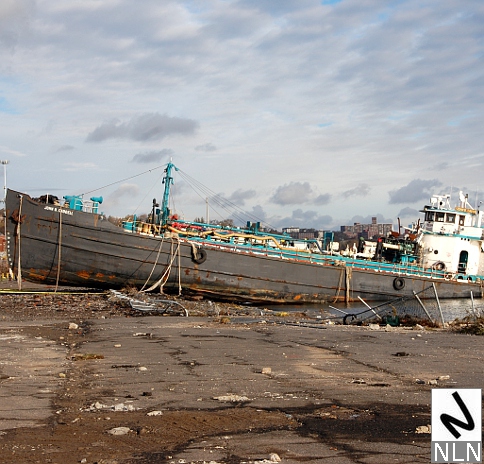
The “John B. Caddell,” a tanker ship, run aground by Hurricane Sandy in the Clifton section of Staten Island.
(Photo: Thomas Altfather Good / NLN)


NEW YORK — November 6, 2012. Global climate change increased the power and fury of Hurricane Sandy, according to Environmental Defense Fund Chief Scientist Steve Hamburg.


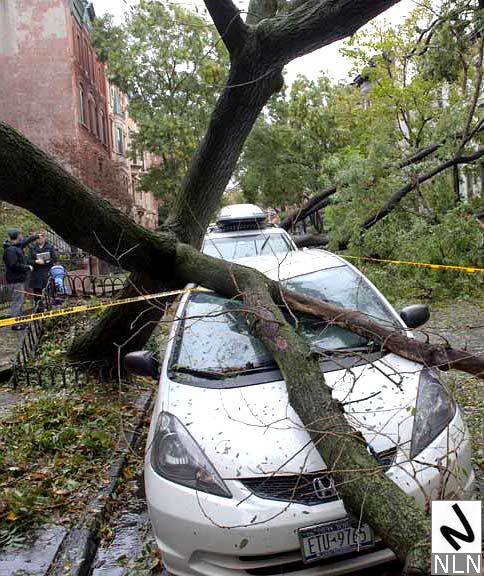
A tree falls in Brooklyn…
(Photo: Ed Hedemann / NLN)

 
The EDF is a non-profit which “Takes on the most urgent environmental threats to the climate, oceans, ecosystems and people’s health,” according to its website. Hamburg said global warming affects the ocean waters, changes in the moisture of the atmosphere and changing energy patterns — as warming in the artic affects patterns of cold air in the atmosphere. In turn, all of these factors made Sandy a more powerful storm, but Hamburg said Sandy wasn’t caused by climate change.


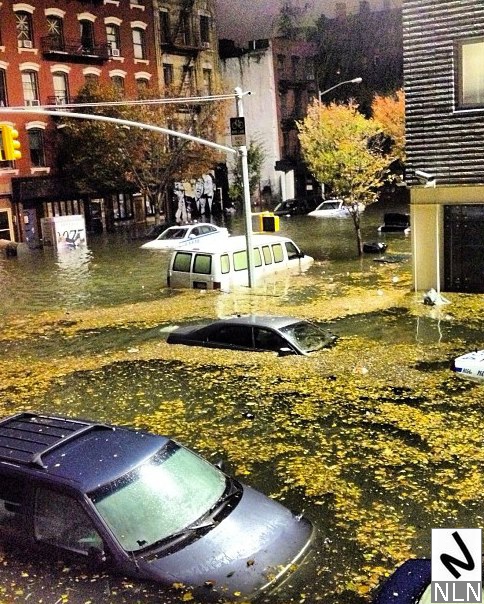
Manhattan under water.
(Photo courtesy of Daniel Millstone and Frank Mullen)

 
“We could see more of this in the future,” Hamburg said. “If you look at the characteristics of this storm, it’s what the climate research community has said will happen.”


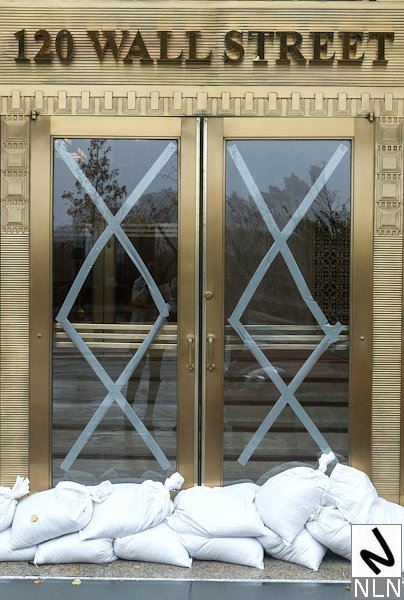
Wall Street before the storm.
(Photo: Nigel French / NLN)

 
Ceres Spokesperson Peyton Fleming said the losses for the insurance industry add up to approximately $20 billion dollars. Ceres is an organization that mobilizes members of the business and investor community to “expand the adoption of sustainable business practices and solutions to build a healthy economy,” according to its website.


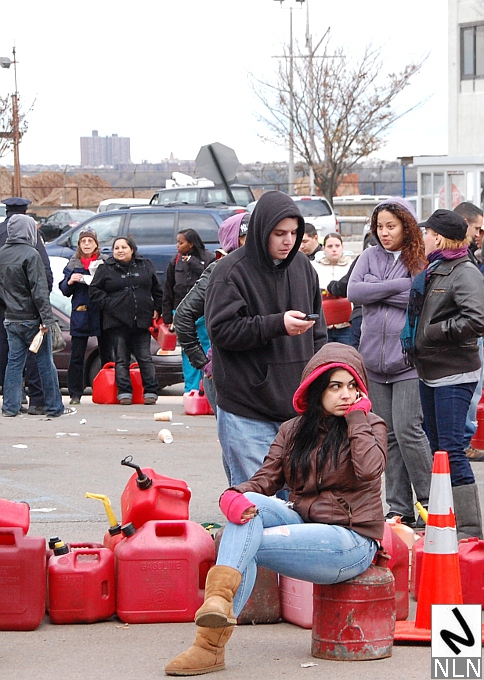
Staten Islanders waiting on line for gas to power their generators.
(Photo: Thomas Altfather Good / NLN)

 
“The estimates on the losses are double what they were a few days ago,” Fleming said. “But the broader economic impact is around $50 billion dollars.”


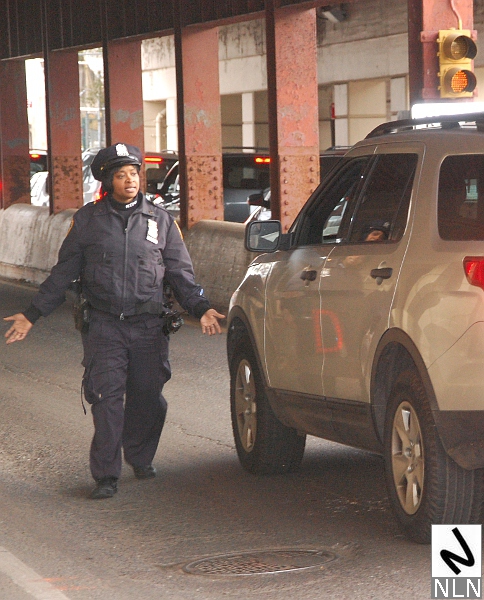
A police officer confronting an SUV driver - on the wrong side of the road.
(Photo: Thomas Altfather Good / NLN)

 
Fleming said the damage from storms like Sandy could impact insurance consumers across the board in higher insurance premiums.


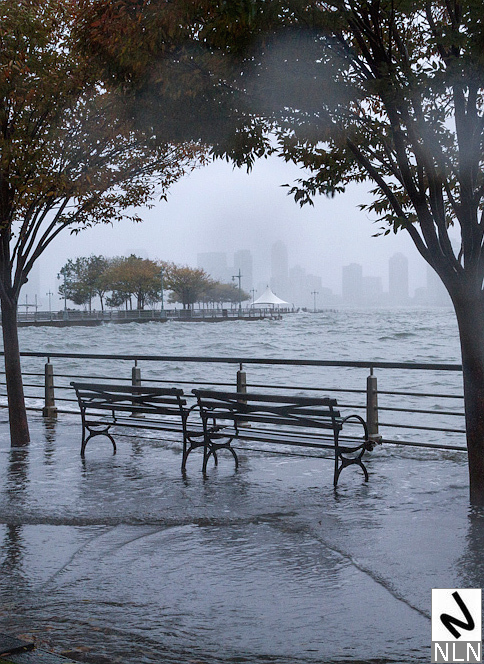
The Hudson River during the storm.
(Photo: Nigel French / NLN)


View Photos From Hurricane Sandy